
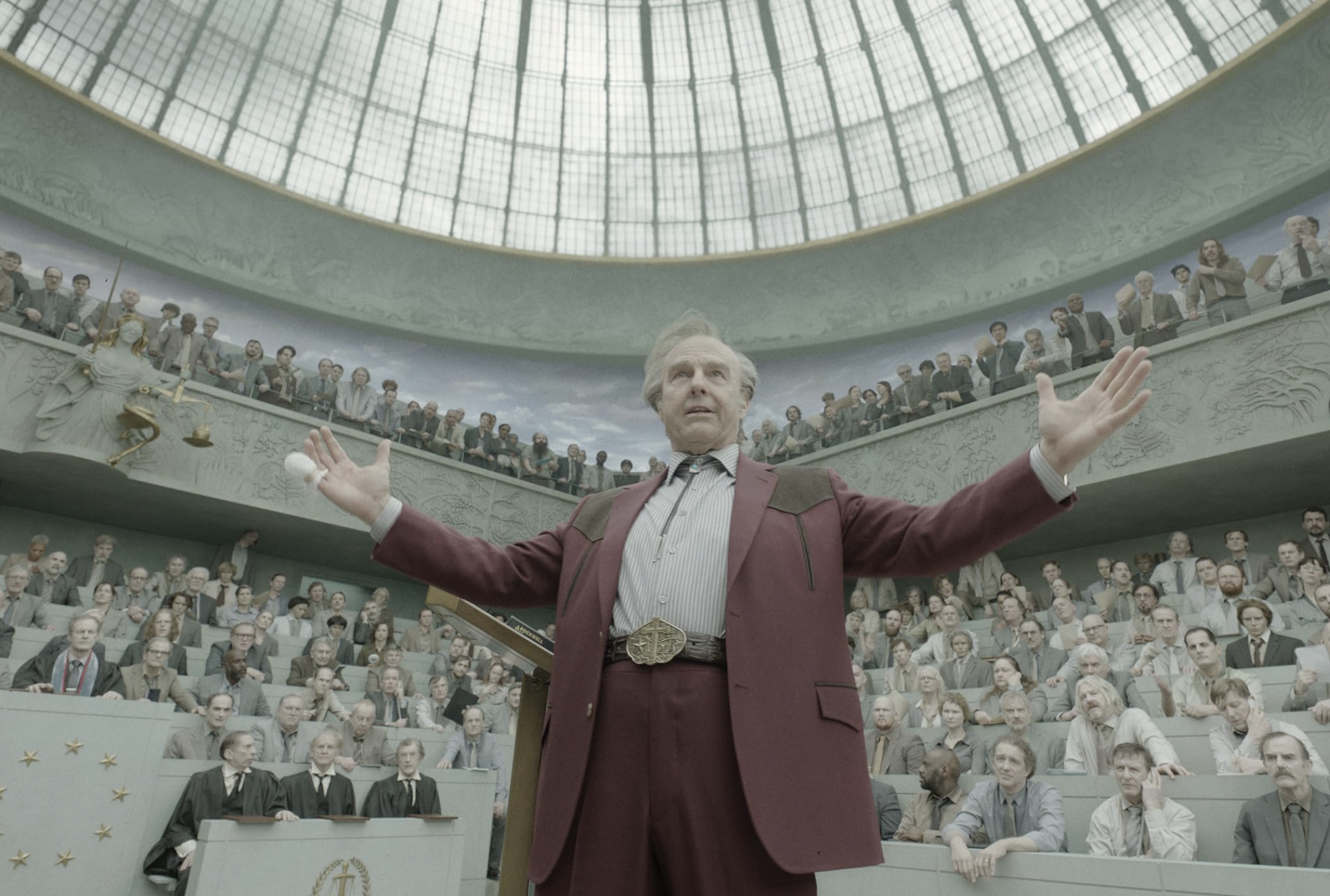
“Words are perception. And perception is reality.”
What happens to a parody when it moves beyond parody? When the jokes are clearly no longer funny to the people telling the jokes, where does that leave the parody element? Digger, the latest film from Oscar-winning director Alejandro González Iñárritu (Birdman, The Revenant), seems like it had a script that moved past being a comedy three or four drafts ago.
There’s that old adage that writing is rewriting, but sometimes, you can do too much rewriting. Digger feels like a victim of its own creative process, following too many threads away from the main narrative, forgetting what it’s about somewhere along the way.
Or is it doing all of that intentionally? Is this actually like Doctor Strange in Avengers: Infinity War running all of the calculations and saying, “Nope, this is the best and strongest version of this particular story we are trying to tell.” And what is that story, you’re beginning to wonder?
An explosion at an oil drilling site in Greenland has broken off a chunk of ice shelf that could collide with Norway and cause a global catastrophe. The president (John Goodman)—and his cabinet of character actors doing their best Strangelove-esque take on American bureaucracy—must decide whether or not to alert Europe to the impending disaster. All roads lead to the mansion of Digger Rockwell (Tom Cruise) then tycoon responsible for the chain of events that have led us to this catastrophic moment in history.
It’s honestly a little bit weird that I got four full paragraphs into my review before mentioning leading man Tom Cruise. This film’s entire marketing campaign (and likely its existence as such a big budget endeavor) hinges entirely on Cruise, but Iñárritu is the star of the show here, and if you see the film, you’ll know what I mean. This isn’t the Tom Cruise show, which is a strange place for Cruise to find himself.
Maybe twenty-five or so minutes in, right around the time your brain starts to think, “you know, Tom Cruise is a really odd choice for this role in this movie,” the film makes a major shift and it becomes slightly clearer why he’s the lead. That’s as much as I’m willing to say because even comparing this film to the three or four films it shares a ton of DNA with would be a weirdly specific spoiler.
The cast is doing what is expected of them, playing everything to the back row of some regional theatre in the Catskills. Sandra Hüller is very good in a mostly thankless role as Digger’s half-sister Emma, while Robert John Burke does his best George C. Scott in Dr. Strangelove as the hawkish military man, and Riz Ahmed does his best to provide the film with some kind of moral compass as the beleaguered climate scientist on Digger’s payroll. Dr. Ganesh.
And can we talk about Jesse Plemons for a second? Just last week in my review for Primetime, I was singing the praises of Skyler Gisondo for finding new layers in such similar character types, and Plemons has that same skill for playing quiet loners. Hot off his terrific performance in last year’s slightly more on target satire Bugonia, Plemons shows up here with a doofy haircut and awkward demeanor that make you question his motives immediately. He also rather elegantly saves Talk to Me’s Sophie Wilde with an exposition dump near the end of the film, selling his summation of the film’s themes way better than she had moments earlier.
So what in heaven’s name is Digger? I haven’t got a clue, if I’m being honest. It’s a parody that gained too much sympathy for its targets, letting them off the hook over and over again. Iñárritu attempts to deftly elude any potential criticism by constantly calling attention to the fact that all of these performances and strange goings-on are part of his master plan.
Perhaps my biggest issue with Digger, the thing that keeps me from signing off on it as a functional satire of our current climate, is the intentional artificiality of it all. The elderly cat looks like a terrible puppet on purpose, those weird mismatched landscapes out the windows of Digger’s mansion look intentionally off… It’s a bit like a filmmaker telling the audience, “you can’t criticize me because I’m criticizing myself and my subject simultaneously. I’m holding everyone to the same standard.“
The film moved past its intended message of “this looks ridiculous because these are ridiculous people” and into the realm of “this looks ridiculous because we've become so concerned with demonstrating that we're in on the joke, we've ultimately forgotten the original joke.”
The quote which with I opened my review isn’t complete. Immediately after Digger speaks these words, Riz Ahmed’s Dr. Ganesh reminds him that “perception is not reality. Reality is reality,” and Digger the film kinda wants to have it both ways. And a third way that’s too spoiler-ish to share. Covering all of your bases is fine, but parody needs a target, and this film moved past a target to just kinda shrug and say, “what can you do?” The satire got buried underneath the commentary about the satire.
Future generations may look back at this review and laugh at me for thinking I’m smarter than this brilliant film. Stranger things have certainly happened, but I don’t think I’m smarter than this film—I just wish the screenplay by Nicolás Giacobone, Sabina Berman, Alexander Dinelaris, and Iñárritu himself had been rolled back a few revisions. I think there was once a really biting, witty, sharp, and incisive parody in here at one point in time, but they kept revising all of those things out of it, leaving us with this misshapen thing. It’s not a victim of its own ambition, it’s two incompatible ideas melded together and overthought to death, and it just doesn’t work as a satire. It’s far too obsessed with the mechanics of satire for that. But it’s also not terrible.
Header image via IMDb